FAFSA 2026-27 Deadlines: A Plain-English Summer Guide
June is the cycle's quiet middle. The 2026-27 FAFSA opened on December 1, 2025, fall classes start in roughly eleven weeks, and most federal aid is still there for students who file now. This guide pulls together every deadline that actually matters for the 2026-27 award year, federal, state, and college-specific, explains what changed this cycle, and gives you a step-by-step way to file before the summer melts away. Numbers in this article come directly from Federal Student Aid and state agency calendars; nothing is estimated.
Higher-education data team
Sources: Sourced from Federal Student Aid (studentaid.gov), the U.S. Department of Education, the National Association of Student Financial Aid Administrators, and state higher-education agency deadline calendars..

The 2026-27 award year in one paragraph
The 2026-27 FAFSA covers federal, state, and most institutional aid for classes that begin between July 1, 2026 and June 30, 2027, so anything starting in fall 2026, spring 2027, or summer 2027. The form opened on December 1, 2025, returning to the on-time December launch after two years of delayed releases. The federal filing window closes at 11:59 PM Central Time on June 30, 2027, with corrections accepted through September 14, 2027 per Federal Student Aid's official cycle dates.
The three deadlines that actually decide your aid
Treat FAFSA as three separate deadlines layered on top of each other. Missing the latest one only loses you federal Pell and Direct Loan eligibility. Missing the earliest ones can quietly cost you thousands in state grants and college-funded aid that ran out before you applied.
- Federal deadline: June 30, 2027. Last day to submit the 2026-27 FAFSA for federal Pell Grants, Direct Subsidized and Unsubsidized Loans, and Federal Work-Study. Corrections accepted until September 14, 2027.
- State deadlines, most fall between February and June 2026. State grant programs (Cal Grant, TAP in New York, MAP in Illinois, TOPS in Louisiana, and dozens more) use the FAFSA as their application, but each state sets its own cutoff. The full list is on studentaid.gov/state-deadlines.
- College deadlines, usually the earliest of the three. Most four-year colleges set a priority date between February 15 and March 15 for incoming students, and many run out of institutional grant money for late filers. Always confirm the date on the school's financial aid page, not a third-party list.
If you are filing in June: the calendar still on the table
Filing in June 2026 still secures the largest pots of money for most students. Federal Pell, Direct Loans, and Work-Study remain fully available. Several state programs accept summer filers, and a handful of schools still hold institutional aid for students who file before July 1.
What is at risk in June is school-funded grant aid at colleges with hard priority deadlines, and state programs in California, Indiana, Tennessee, and a few others whose primary cutoffs already passed. The fix is to file the FAFSA now and call each school's financial aid office the same week to ask whether any institutional aid remains.
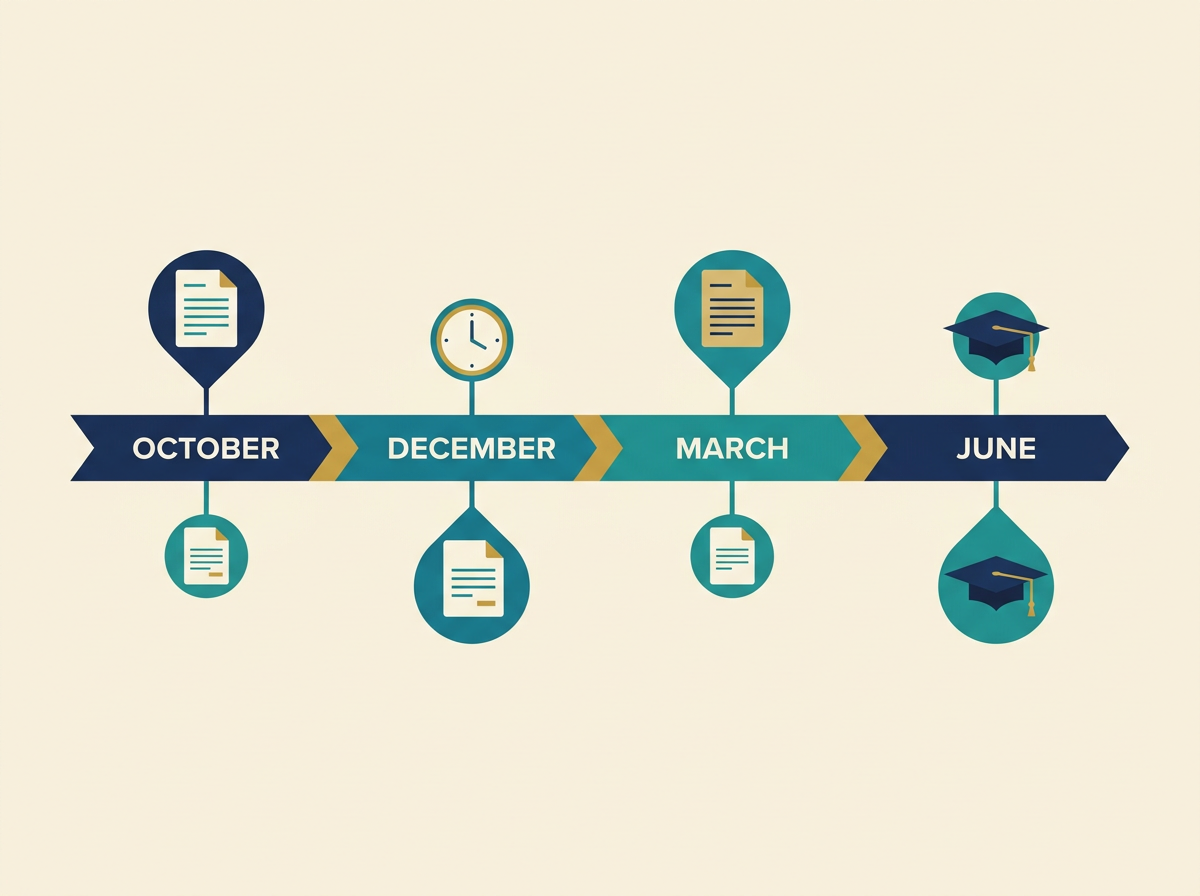
What changed for the 2026-27 cycle
After two consecutive cycles of delayed launches and form rebuilds, the U.S. Department of Education committed to a December 1, 2025 release for 2026-27 and held that date. The form is the post-FAFSA-Simplification-Act version: about 36 questions for most students, IRS data brought in automatically through the Direct Data Exchange, and a Student Aid Index (SAI) replacing the old Expected Family Contribution. The Federal Student Aid FAFSA announcements page lists the year's specific updates.
- Pell Grant maximum is $7,395 for 2026-27, unchanged from the prior year per the Federal Student Aid Pell page.
- SAI floor remains -$1,500, meaning the lowest-income students show a negative SAI and qualify for the maximum Pell automatically.
- Contributor invitations are stable, but every parent or spouse listed as a contributor still needs their own FSA ID before the form can be submitted. Create the FSA ID at least three business days before you file to clear the Social Security verification window.
- Asset and small-business reporting continues to exclude family farms and small businesses with 100 or fewer employees from reportable assets.
- Paper FAFSA processing has been stabilized for 2026-27, but the online form still returns a Submission Summary roughly 1 to 3 business days faster.
Step-by-step: filing the 2026-27 FAFSA in June
Block 45 minutes once, then a 15-minute follow-up two weeks later. Filing the form is shorter than the prep.
- 1. Pull last cycle's documents. The 2026-27 FAFSA uses 2024 tax data. Have the 1040, W-2s, and any 1099s from 2024 within reach for the student and each contributor.
- 2. Create or recover every FSA ID. Student, plus one parent if the student is a dependent, plus a spouse if the student is married. Use studentaid.gov/fsa-id. Allow up to three business days for Social Security verification.
- 3. Start the FAFSA at studentaid.gov and choose the 2026-27 form. The student begins it; contributors are invited by email from inside the form.
- 4. Use the Direct Data Exchange. It transfers 2024 tax data from the IRS automatically. Manual entry should be a last resort because it is the most common cause of verification holds.
- 5. List up to 20 schools. Every school you list receives the data within 1 to 3 business days. Add every program you are even considering, listing a school is not a commitment.
- 6. Submit and save the confirmation email. A 4-digit confirmation number and a PDF copy of the Submission Summary are both worth keeping.
- 7. Two weeks later, check each school's portal. Award letters land in the school's own financial aid portal, not your FAFSA account. Compare them using our net price explainer and our pay-for-college framework.
State deadlines worth flagging now
States set their own FAFSA cutoffs, and they range from very strict to fully open. Confirm yours on studentaid.gov/apply-for-aid/fafsa/fafsa-deadlines before assuming a date.
- California (Cal Grant): April 2, 2026 priority deadline already passed; September 2, 2026 deadline still open for community college Cal Grant.
- New York (TAP): Accepts applications until June 30, 2027 for the 2026-27 academic year.
- Illinois (MAP): Awards continue on a rolling basis until funds are exhausted; file now even if no published deadline.
- Texas (TASFA and state aid): Deadlines vary by institution; check the specific public university's date.
- Tennessee (HOPE / TELS): September 1, 2026 deadline for fall enrollees; the prior priority date was earlier.
- Pennsylvania (PHEAA): May 1, 2026 for first-time applicants attending four-year programs; August 1, 2026 for community college and certificate programs.
Verification: what to do if your file is selected
Roughly 18% of FAFSA submissions are selected for verification each cycle, according to Federal Student Aid verification guide. Selection is not an accusation; it is a routine check that the data you reported matches IRS records. The school's financial aid office (not the federal government) drives the process. The cleanest way through it is to respond within 14 days, submit the exact documents listed in the request, and call the office once to confirm receipt.
Files selected for verification stall the aid disbursement until the documents clear. Filing the form in June leaves a comfortable buffer; filing in late August does not.
Special situations the form does not always make obvious
Three scenarios trip up summer filers most often.
- Income dropped significantly in 2025 or 2026. The form uses 2024 income, but you can file a professional judgment appeal with the school's financial aid office to have current income considered. Bring the most recent pay stubs and a brief written explanation.
- Estranged parents or unsafe family situations. Dependent students who cannot get parent information can request a dependency override or a provisional independent determination. Documentation requirements are real but the appeal succeeds in most cases when supported by a counselor or social worker letter.
- Mixed-status families. A student who is a U.S. citizen with parents who do not have a Social Security number can still complete the FAFSA. Parents create an FSA ID using the studentaid.gov contributor flow, with a personal identity verification step that does not require an SSN.
What to do with the award letters when they arrive
Award letters use inconsistent formats and frequently lump grants, loans, and work-study into one 'total aid' number. The figure that matters is the net price, total cost of attendance minus only grants and scholarships, not loans. Our net price guide walks through how to convert any award letter into a comparable number, and the compare tool lets you stack up to four schools side-by-side on cost and graduation outcomes.
A useful rule of thumb from the Federal Reserve Bank of New York's college labor market research is that total borrowed federal debt at graduation should stay at or below the expected first-year earnings for the credential. Plug the program's median earnings from the College Scorecard into that ratio before you accept a loan amount.
Putting it together
If you have not filed the 2026-27 FAFSA yet, file this week. Create or recover every FSA ID today, pull 2024 tax documents tomorrow, and complete the form before the weekend. Two weeks after submission, log into each school's financial aid portal, compare the offers on net price (not total aid), and call any office whose number does not match the math. The cycle is long enough to do this calmly in June; it is not long enough to do it calmly in August.
Further reading
On UniScorecard
- How to pay for college
The 2026 funding framework FAFSA aid plugs into.
- How to read a college's net price
Turn any award letter into a comparable cost number.
- How to compare colleges
A data-first checklist for narrowing your list.
- Is a 65% graduation rate good?
Why completion odds belong in every aid decision.
- Compare schools side-by-side
Up to four schools on cost, outcomes, and earnings.
- Browse schools by state
State-by-state directory with median net price and grad rate.
External sources
- Federal Student Aid: 2026-27 FAFSA ↗
Official application portal and account creation.
- FSA: State FAFSA deadlines ↗
Current state-by-state cutoffs for the 2026-27 cycle.
- Federal Student Aid: FAFSA announcements ↗
Official Department of Education updates for the 2026-27 form.
- Federal Student Aid: Verification guide ↗
How verification works and what to expect if selected.
- Pell Grant program (studentaid.gov) ↗
Pell eligibility, award amounts, and SAI explanation.
- College Scorecard ↗
Federal program-level earnings and debt data.
- NY Fed: College labor market ↗
Earnings, underemployment, and debt ratios by major.
Related guides
CSS Profile vs FAFSA: Which Form Do You Need in 2026-27?
Plain-English guide to CSS Profile vs FAFSA for 2026-27: who needs each form, what they cost, which schools require them, and how to prepare before October 1.
How to Read a Financial Aid Award Letter (2026 Guide)
Decode your 2026-27 aid award letter in 15 minutes: gift aid vs loans, cost of attendance, comparing offers, and steps before the tuition deposit.
How to Pay for College: A 2026 Plan That Actually Adds Up
A step-by-step plan for paying for college using grants, scholarships, work, savings, and the smallest loan possible, built around the federal data colleges report.
Frequently asked
- Is it too late to file the 2026-27 FAFSA in June 2026?
- No. The federal deadline is June 30, 2027, so all federal Pell Grant, Direct Loan, and Work-Study eligibility is still available. What is at risk in June is school-funded institutional aid at colleges with hard priority deadlines and a handful of state grants whose primary cutoffs already closed. File now and call each school the same week.
- What is the 2026-27 Pell Grant maximum?
- The maximum Pell Grant for the 2026-27 award year is $7,395, unchanged from the prior cycle. The award is prorated for part-time enrollment and depends on your Student Aid Index (SAI) and cost of attendance.
- Do I need to refile the FAFSA every year?
- Yes. Each award year requires a new FAFSA. Returning students can use the renewal form, which pre-fills demographic information from the prior year. Income data, household size, and contributor relationships all need to be reconfirmed annually.
- How long after filing the FAFSA do award letters arrive?
- Most schools post award letters to their financial aid portal 1 to 4 weeks after they receive your FAFSA data, which itself arrives 1 to 3 business days after you submit. Summer filers often receive offers within two weeks because the school's queue is shorter than in March.
- What income year does the 2026-27 FAFSA use?
- The 2026-27 FAFSA uses 2024 tax data. Income is imported automatically from the IRS through the Direct Data Exchange when contributors consent during the form. Significant income changes since 2024 can be appealed to the school's financial aid office through a professional judgment review.
- Can I list more than ten schools on the FAFSA?
- Yes. The 2026-27 FAFSA allows up to 20 colleges per submission, and you can add or remove schools after submission through the online form. Listing a school is not a commitment to attend.
About the author
UniScorecard Editorial
Higher-education data team
We translate the U.S. Department of Education's College Scorecard into plain-language guides for students, families, and counselors. Every metric we publish is sourced directly from the federal Most Recent Cohorts institutional file.
Read our methodology →