Early Decision vs Early Action 2027: Which Is Right for You?
The Common Application opens on August 1, which means rising seniors have about eight weeks to decide whether to apply somewhere Early Decision, lean on Early Action, or skip the early round altogether. The choice is not just about deadlines. It changes admission odds, affects how you compare financial aid offers, and locks in (or leaves open) where you can apply elsewhere. Here is how Early Decision and Early Action actually differ for the 2026-27 cycle, which schools offer each, and how to pick the path that fits your list.
Higher-education data team
Sources: Sourced from official admissions pages at Brown, Columbia, Cornell, Dartmouth, Duke, Harvard, MIT, Northwestern, Penn, Princeton, Stanford, Vanderbilt, Yale, the University of Chicago, the University of Michigan, the University of Virginia, the University of North Carolina at Chapel Hill, Georgetown, Boston College, and Notre Dame; the Common Application; NACAC; and the U.S. Department of Education's College Scorecard..

Early Decision vs Early Action in one paragraph
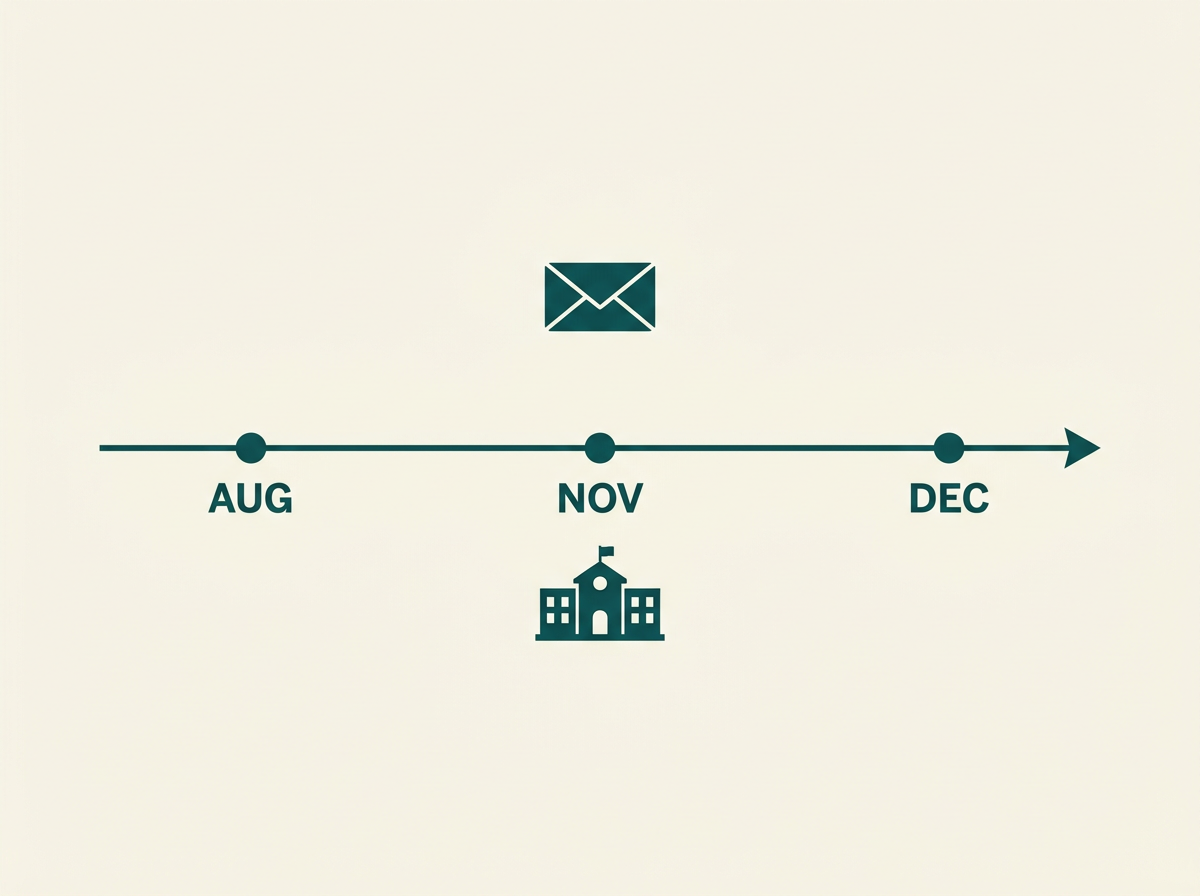
Early Decision (ED) is a binding application. You apply by an early deadline (usually November 1 or November 15), receive a decision in mid-December, and if admitted you must withdraw every other application and enroll. Early Action (EA) is non-binding. You apply by the same early deadline, hear back in December or January, and have until the regular May 1 reply date to decide. Both round options usually offer a small to meaningful boost in admission rate compared with the Regular Decision pool, but the boost is much larger for ED at most selective schools.
The four flavors you will actually see
Most U.S. selective colleges use one of four early policies. Knowing which kind a school uses is the first thing to check on its admissions page, because the rules around where else you can apply differ in ways that matter.
- Standard Early Decision (ED I). Binding. Single-school commitment. Examples include Brown, Columbia, Cornell, Dartmouth, Duke, Northwestern, Penn, Vanderbilt, and the University of Chicago.
- Early Decision II (ED II). Same binding rules as ED I but with a January deadline (usually January 1 or January 15) and a February decision. Useful if your first-choice school is one that offers ED II, or if you were deferred or denied from an ED I school. Schools that offer ED II include the University of Chicago, Vanderbilt, NYU, Tufts, Emory, Boston College, and many liberal arts colleges.
- Restrictive Early Action (REA), also called Single-Choice Early Action. Non-binding, but you cannot apply Early Decision or Early Action anywhere else (with narrow exceptions for public universities and rolling-admission schools). Harvard, Princeton, Stanford, Yale, Notre Dame, and Georgetown use a version of this.
- Open Early Action (EA). Non-binding and unrestricted. You can apply EA to as many schools as you want and still keep your options open. MIT, Caltech, the University of Michigan, the University of Virginia, UNC Chapel Hill, the University of Wisconsin, Purdue, and most public flagships use this model.
What the admission-rate boost actually looks like
It is easy to overread published ED and EA acceptance rates. The early pool is self-selected. It skews toward applicants with strong academics, recruited athletes, legacy applicants, and students from feeder high schools who are confident they can present a finished file in October. A higher early acceptance rate does not mean every applicant gets the same lift.
That said, the gap is real at most selective schools. At several Ivies, the ED or REA admission rate runs two to four times the Regular Decision rate. At schools with open EA, the gap is usually smaller because the EA pool is much larger and looks more like the overall applicant pool. The Common Data Set, which most schools publish, lists early and regular admit counts side by side and is the cleanest place to compare for any one school.
When Early Decision makes sense
ED is the right call when three things line up: a clear first choice, a finished application by late October, and a financial picture that does not require comparing aid offers in April.
- You have one school that is meaningfully ahead of the rest. Not your top three. Your top one. If you would be equally happy at two or three places, ED is not your tool.
- Your application is genuinely ready. Strong recommendations, polished essay, and standardized testing (where required) complete before the deadline. A rushed ED application rarely wins.
- Your family can absorb the listed cost or has run the school's net price calculator and is comfortable with the estimate. ED is binding even if the aid offer is disappointing, though every school will let a family withdraw if the demonstrated need is not met.
- Your score, GPA, and curriculum are at least in the school's middle 50 percent. ED gives a meaningful lift to borderline-but-strong files. It does not turn a long-shot file into an admit.
When Early Action is the better fit
EA is the lower-risk choice and the right default for most students. You get an answer in December or January, which removes anxiety and frees up your January and February to focus on essays for whatever schools remain. You can still compare financial aid offers from every school in April. And you keep the option to apply ED II to a different school if your favorite is one that offers a January round.
- Restrictive EA at one Ivy plus open EA at one or two safeties is a very common pattern for top applicants who do not want to commit early.
- Open EA at three to six schools is a sensible plan for students whose list is dominated by public flagships or strong privates with non-binding rounds.
- If your first-choice school offers only ED, and the binding commitment is genuinely fine for your family, ED still beats EA elsewhere for that one school. But if you are unsure, EA is the safer move.
The financial-aid question
This is where ED gets a bad reputation, and it is partly deserved. Because ED is binding, you commit before you can compare aid offers from any other school. For families with significant demonstrated need; that is a real constraint.
Two things soften the constraint at the most selective schools. First, every Ivy League school, MIT, Stanford, Duke, and a long list of others meet 100 percent of demonstrated need without loans for families under published income thresholds. For those families, the ED aid offer is typically the same offer they would receive in April, so the loss of comparison shopping is mostly theoretical. Second, every school with ED publishes a release clause: if the financial aid offer makes attendance impossible, the family can withdraw without penalty.
Where ED is genuinely risky is at need-aware schools that do not meet full need, and at private universities where merit aid (not need-based aid) is a large part of the package. Merit aid is most easily won by being recruited across multiple offers. ED removes that bargaining power. Run the net price calculator on every ED candidate before you commit and treat anything that comes in materially higher than your budget as a hard stop.
Deferral, denial, and what happens next
Early outcomes come in three shapes: admit, defer, or deny. An ED admit is binding. A defer moves the file into the Regular Decision pool and keeps it under consideration through March. A deny means the school will not reconsider the file that cycle.
If you are deferred from an ED I school; you are released from the binding commitment and can apply ED II elsewhere if a strong fit offers it. If you are denied, the same release applies. Either way, the right next step is to send a short, factual update letter in January describing fall-semester grades, any new test scores, and one or two genuine new accomplishments. A long emotional letter does not help.
Most schools defer rather than deny in the early round, which means the regular pool absorbs a lot of strong early candidates. That dynamic is why building a balanced Regular Decision list in October, before early results come back, is the single most important risk-management move of senior fall.
Building a sensible early plan
A workable early plan usually combines one early-round application at a reach school, two or three open-EA applications at match and likely schools, and a complete Regular Decision list ready to submit if the early answers are not what you hoped for.
- Pick the early-round school first. Decide between ED, ED II, or REA based on how strong the preference is and what each school allows.
- Add open-EA applications wherever they exist. Most public flagships have non-restrictive EA with no downside and a real psychological benefit of getting one or two admits in December.
- Finish the Regular Decision list by mid-October so a deferral or denial in December does not force a January scramble.
- Run our school comparison tool on every short-listed school to see admission rate, SAT range, and median net price together. The combination usually clarifies which schools deserve the early slot.
- Confirm each school's exact deadline and policy on the Common Application's member school search. Policies and dates do shift, especially for ED II.
The honest short answer
If you have a clear first choice, a finished file by November 1, and a financial picture that does not depend on comparing aid offers, apply Early Decision. If any one of those is shaky, apply Early Action wherever it is offered (Restrictive EA at one school plus open EA at a few others is the cleanest version) and keep ED II in reserve for January.
Either way, build a complete Regular Decision list this summer. The early round changes the timing of the answer. The work behind the answer is the same.
Further reading
On UniScorecard
- Senior summer college application checklist
Week-by-week summer plan that pairs with the early-round calendar.
- Test-optional colleges for 2026-27
Which schools require SAT or ACT scores for early applicants this fall.
- How to read a college's net price
Run the net price calculator before committing to an ED school.
- How to compare colleges
A data-first checklist for picking which school deserves the early slot.
- Compare schools side-by-side
Stack up to four colleges on admission rate, SAT range, and net price.
- Browse schools by state
Find admission rates and net price by state directory.
External sources
- Common Application member school search ↗
Search any Common App member school to see its current ED and EA deadlines and policies.
- NACAC: Early Decision and Early Action explained ↗
Industry overview from the National Association for College Admission Counseling.
- MIT first-year application options ↗
Example of an open Early Action policy with no restrictions.
- Harvard Restrictive Early Action ↗
Example of a Restrictive Early Action policy and its exceptions.
- College Scorecard ↗
Federal data on admission rate, cost, and outcomes for every Title IV institution.
Related guides
How to Build a Balanced College List (Class of 2027)
A data-driven method for building a balanced college list of 8 to 12 schools before August 1: reach, target, and likely tiers with real federal numbers.
Demonstrated Interest 2026: Which Colleges Track It
Which colleges track demonstrated interest for the 2026-27 cycle, the ten signals admissions offices count, and a summer plan to show interest without overdoing it.
What Is a Good GPA for College Admissions?
Applications open now and your GPA is already set. See what a good GPA for college really means, how weighting works, and how to apply with the grades you have.
Frequently asked
- Is Early Decision binding even if I do not get the financial aid I expected?
- ED is binding once you accept the offer, but every school with ED publishes a release clause that allows a family to withdraw without penalty if the financial aid package makes attendance genuinely impossible. The expectation is that you have run the school's net price calculator in advance and discussed the budget honestly. Surprise withdrawals based on a number you could have predicted are not received well.
- Can I apply Early Action to multiple schools?
- It depends on the type. Open Early Action lets you apply to as many EA schools as you want. Restrictive Early Action (used by Harvard, Princeton, Stanford, Yale, Notre Dame, and Georgetown) limits early applications elsewhere with narrow exceptions for public universities and rolling-admission schools. Read each REA school's exact wording, because the exceptions are not identical.
- Does applying ED actually raise my chances?
- Yes, at most selective schools, the published ED admission rate is two to four times the Regular Decision rate. Part of that gap is a real institutional preference for committed students; part is that the ED pool is self-selected and stronger than the overall pool. The lift is meaningful for borderline-but-strong applicants and minimal for applicants well below a school's published academic profile.
- What is the difference between ED I and ED II?
- The rules are identical (binding, single school, withdraw all other applications if admitted), but the timing differs. ED I deadlines are usually November 1 or November 15 with mid-December decisions. ED II deadlines are usually January 1 or January 15 with February decisions. ED II is the right tool if you decide late in the fall that one specific school is your clear first choice, or if you were deferred or denied from an ED I school.
- If I am deferred ED, can I apply ED II somewhere else?
- Yes. An ED deferral releases you from the binding commitment to the first school. You remain in their Regular Decision pool, but you are free to apply ED II elsewhere if another school is a clear next-best fit and offers a January round.
About the author
UniScorecard Editorial
Higher-education data team
We translate the U.S. Department of Education's College Scorecard into plain-language guides for students, families, and counselors. Every metric we publish is sourced directly from the federal Most Recent Cohorts institutional file.
Read our methodology →