Federal Work-Study: How It Works, What to Accept
Move-in week is three to four weeks away at most colleges, and the campus jobs attached to work-study awards are being claimed right now by students who already emailed a supervisor in July. That is the part nobody tells you. Accepting work-study in your aid portal does not hand you a job or a dollar. It gives you permission to apply for a pool of subsidized positions, and when the pool empties, the award quietly goes unspent. Roughly $1.2 billion flows through the program each year, spread across about 3,000 participating colleges, and a real share of it goes back unused because students waited for someone to assign them a shift. Here is how the money actually works and what to do in the next two weeks.
Higher-education data team
Sources: Program rules sourced from Federal Student Aid and the Federal Student Aid Handbook; cost and outcome figures from the U.S. Department of Education College Scorecard and IPEDS..
What work-study actually is
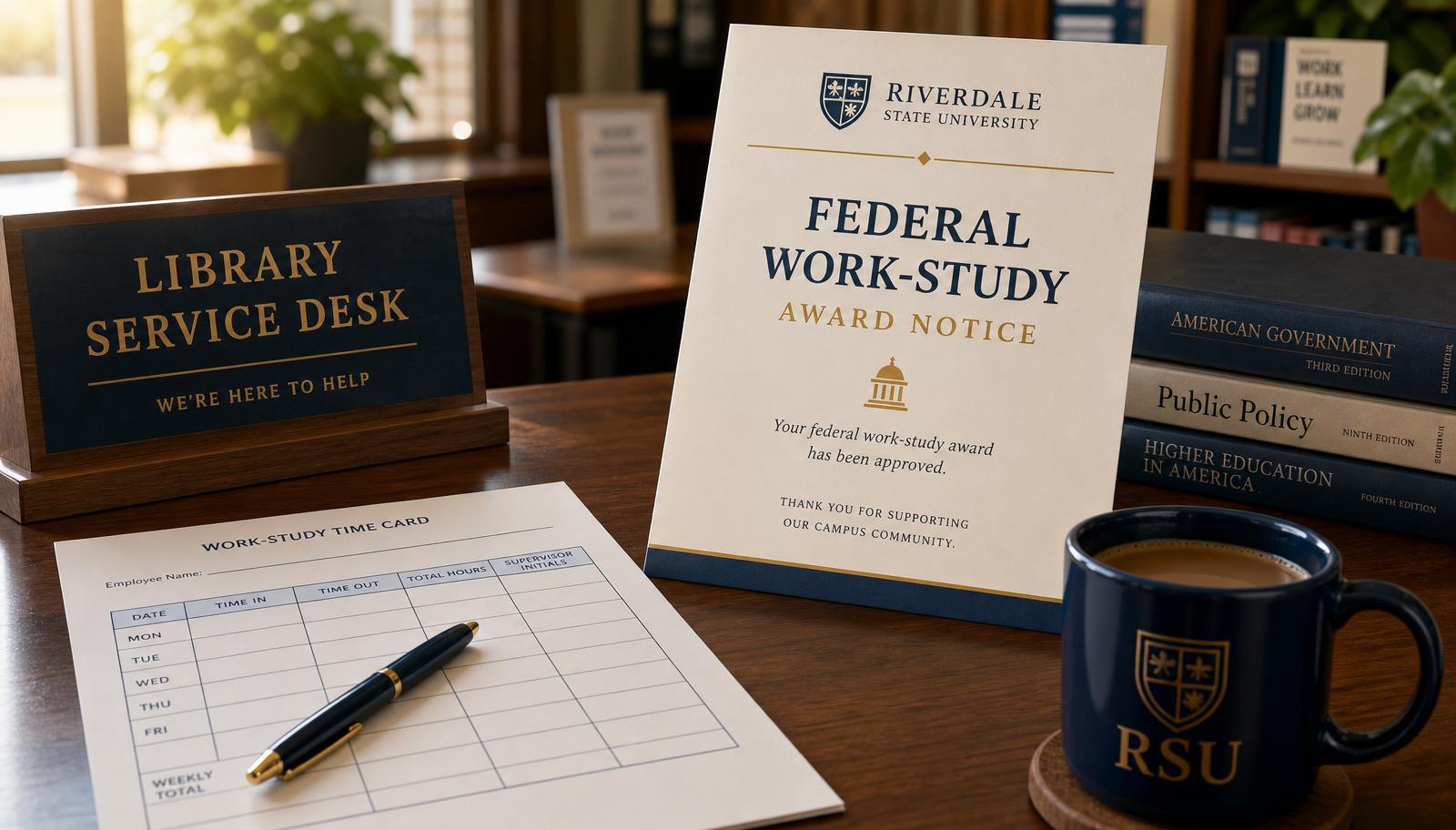
Federal Work-Study is a need-based aid program that pays part of a student's wages so colleges can hire more students than their own budget allows. Your college applies for a block of federal money, then spends it on payroll.
Your award letter lists a dollar figure, often between $1,500 and $3,500 for the year. That figure is a ceiling on what you may earn in the program, not a grant deposited to your account. You earn it by the hour and receive it in a paycheck, usually every two weeks.
Eligibility comes straight from your FAFSA. Federal Student Aid explains the basics on its work-study page, and the aid formula behind the offer is described in the federal how aid is calculated guidance.
Why the paycheck beats a regular campus job
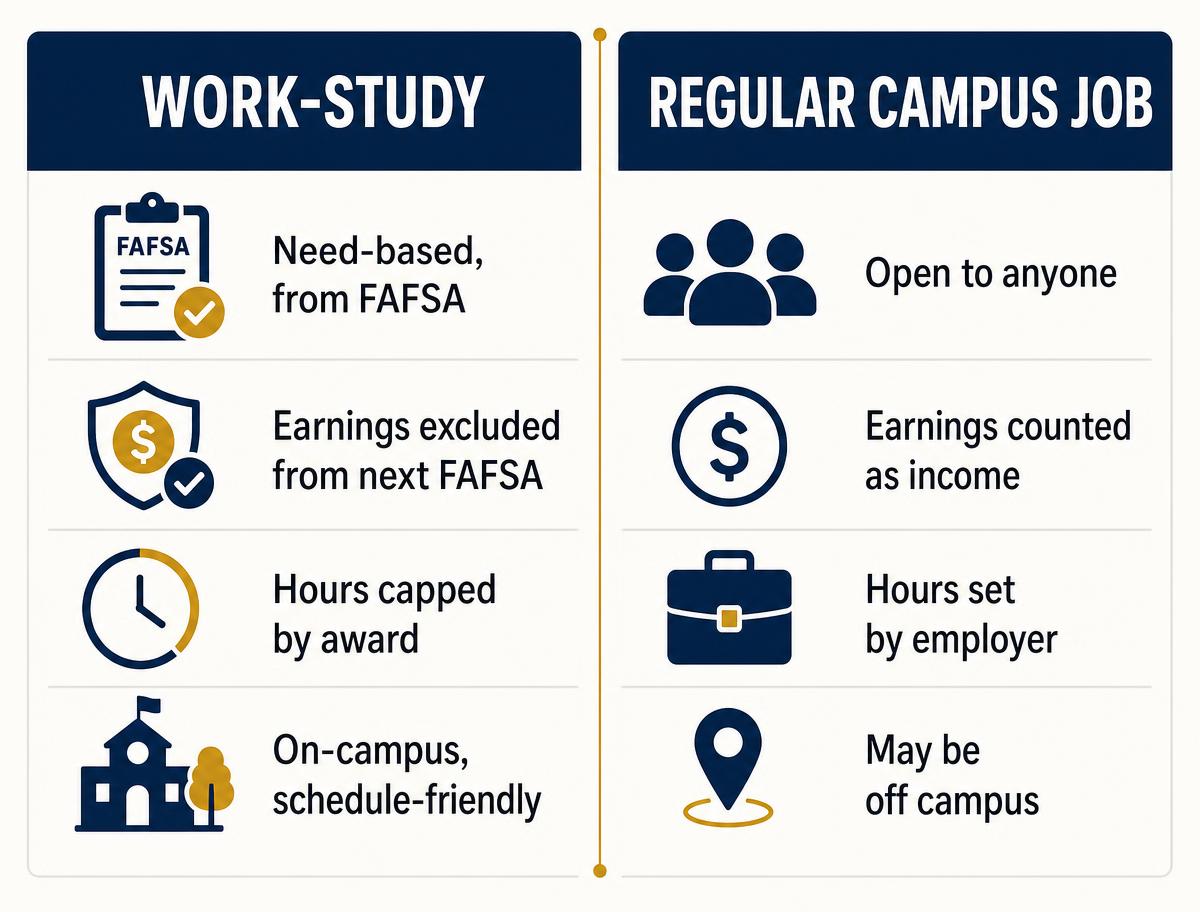
Two students can hold the same shift at the same circulation desk for the same wage. Only one of them keeps that income out of next year's aid formula.
Work-study earnings are excluded from the FAFSA's income calculation. Ordinary job income is not. A student who earns $3,000 at an off-campus cafe can see next year's aid package shrink because that money counted; the work-study student sees no change.
- Earnings are excluded from the following year's FAFSA income calculation
- Supervisors are trained to schedule around class times and exam weeks
- Most positions sit on campus, so commute cost and travel time drop to near zero
- Hours stop when you hit your award ceiling, which protects study time in the spring
- The job appears on a résumé with a named supervisor who can serve as a reference
What it pays and how many hours that means
Wages must meet at least the federal minimum, and most colleges pay above it. Library, lab, and tutoring roles commonly land between $12 and $17 an hour depending on the state and the skill involved.
Run the arithmetic before you commit. A $2,400 award at $15 an hour is 160 hours of work. Spread across a 30-week academic year; that is roughly five and a half hours a week, or one weekday afternoon.
That number matters more than the award size. A student handed a $4,000 award at $12 an hour is looking at eleven hours a week, which is a different life during midterms.
- Divide your award by the posted hourly wage to get total hours for the year
- Divide those hours by 30 weeks to get your realistic weekly commitment
- Ask whether the award covers fall and spring or one term only
- Confirm whether your college allows summer work-study, since some do
The August sequence that gets you hired
Work-study jobs are almost never assigned. Students apply, interview briefly, and get hired by the department that runs the position. The best roles go early, and the students who get them start in July and early August.
- Accept the work-study line in your aid portal today, since you cannot be hired without it
- Open your college's student employment site and read the posted listings, not the general job board
- Email two or three supervisors directly with your class schedule and your available blocks
- Ask the financial aid office whether any award amount is unclaimed after the first week of classes
- Bring identification and direct deposit details to onboarding so your first paycheck is not delayed
- If nothing opens, ask to be placed on a waitlist and check back during week three when schedules shift
The jobs worth chasing
Departments hire for wildly different work under the same funding stream, and the pay rarely reflects how useful the role is later.
Research assistant slots in a faculty lab, writing center tutoring, and IT help desk shifts tend to pay the most and teach the most. Front-desk and event-staffing roles pay the same as the rest but often come with quiet stretches you can study through, which is worth real money in exam season.
- Faculty research assistant: strongest recommendation letters, hardest to get after week one
- Writing or math tutoring center: flexible hours, direct link to your own coursework
- IT or library help desk: steady shifts, transferable technical skills
- Community service placement, such as an America Reads tutoring site: federal rules require colleges to reserve part of their funds for community service work
Where work-study sits in your funding stack
Work-study is the fourth line to accept, and the order changes what you owe at graduation.
Take grants and scholarships first, since none of it is repaid. Take the Pell Grant if you qualify, described on the federal Pell Grant page. Take work-study next. Only then decide how much of the subsidized and unsubsidized loan offer you actually need, using the rules on the federal loan types page.
A $3,000 work-study award used in full is $3,000 you do not borrow. Across four years; that is roughly $12,000 in principal and several thousand more in avoided interest.
What to do if your award is missing or too small
Not every eligible student gets an offer. Colleges receive a fixed federal allocation and distribute it until it runs out, so timing and packaging policy decide as much as need does.
Ask the aid office two specific questions: whether unclaimed work-study is reallocated after the add-drop deadline, and whether a documented change in family finances qualifies you for a professional judgment review. Both requests are routine and both are answered faster in August than in October.
If the answer is no, campus employment outside the program is still worth pursuing. Just remember that those wages count on next year's FAFSA.
Check the numbers behind the offer
A generous work-study award does not make a college affordable. What decides that is net price, the amount students actually pay after all grant aid, and whether students finish.
Both figures come from federal data and sit on every UniScorecard school page next to graduation rate and median earnings. Put your finalists on one screen in our college comparison tool and see whether the aid package closes the gap or just narrows it.
One more habit for rising seniors: use our state college guides to find in-state options where the cost math works before you fall for a package that leans on borrowing.
Your next two weeks
Accept the award line today. Email two supervisors by the weekend with your fall schedule attached. Confirm your hourly wage and total hours in writing before your first shift, so your award does not run dry in February.
Then set a calendar reminder for October 1, when the next FAFSA cycle opens. Work-study eligibility resets every year, and the students who file early are the ones still holding an award offer in the spring.
Further reading
On UniScorecard
- How to read a financial aid award letter
Find the work-study line on your offer
- Subsidized vs unsubsidized loans
What to accept after work-study
- How to pay for college
The full funding stack, in order
- FAFSA 2026-27 deadlines
Work-study eligibility starts here
- Merit scholarships
Money that never needs earning back
- How to read a college net price
What families actually pay after aid
- Compare colleges side by side
Net price, graduation rate, and earnings on one screen
- Browse every U.S. college
Federal cost and outcome data by school
- State-by-state college guides
Lower-debt in-state options
External sources
- Federal work-study ↗
Official program rules and eligibility
- How financial aid is calculated ↗
Where your award figure comes from
- Federal Pell Grant ↗
Grant aid to accept first
- Subsidized and unsubsidized loans ↗
Borrowing rules after work-study
- Apply for aid with the FAFSA ↗
Required for a work-study offer
- Federal Student Aid Knowledge Center ↗
Program handbook and allocation rules
- College Navigator ↗
Aid amounts by college
- College Scorecard ↗
Federal cost, debt, and earnings data
Related guides
Subsidized vs Unsubsidized Loans: Which to Accept in 2026
Subsidized and unsubsidized federal loans look identical on your aid offer but cost thousands differently. See which to accept before your fall 2026 bill.
Merit Scholarships: How to Win More College Money
Merit scholarships cut college costs without a financial-need test. Learn who awards them, how much they are worth, and how to target them before applications open.
How to Read a Financial Aid Award Letter (2026 Guide)
Decode your 2026-27 aid award letter in 15 minutes: gift aid vs loans, cost of attendance, comparing offers, and steps before the tuition deposit.
Frequently asked
- Do I have to accept federal work-study?
- No. Work-study is optional, and declining it does not affect your grants or loans. Accept it if there is any chance you will work, because you cannot be hired into a work-study position without accepting the award first, and reversing a decline mid-semester is often impossible once funds are reallocated.
- Does work-study money get applied to my tuition bill?
- Usually not. You earn it by the hour and receive a paycheck, typically every two weeks, which you use for books, transportation, and daily costs. Some colleges let you authorize the earnings toward your student account, so ask the aid office if that is what you want.
- Does work-study income affect next year's financial aid?
- No. Federal work-study earnings are excluded from the FAFSA income calculation, which is the program's biggest advantage over an ordinary job. Wages from a non-work-study employer do count and can reduce next year's aid.
- How many hours a week is work-study?
- Most students work five to twelve hours a week. Divide your award by your hourly wage to get total hours, then divide by about 30 weeks of the academic year. A $2,400 award at $15 an hour works out to roughly five and a half hours a week.
- What happens if I do not earn my full award?
- You simply receive less money. Unearned work-study is not converted to a grant or a loan, and it does not roll over to the next year. Colleges often reallocate unspent funds after the add-drop deadline, which is why claiming a job in August matters.
- Can I have a work-study job and another job at the same time?
- Yes, in most cases. Your work-study hours are capped by your award, so many students add outside hours. Keep in mind that the outside wages count as income on your next FAFSA while the work-study earnings do not.
About the author
UniScorecard Editorial
Higher-education data team
We translate the U.S. Department of Education's College Scorecard into plain-language guides for students, families, and counselors. Every metric we publish is sourced directly from the federal Most Recent Cohorts institutional file.
Read our methodology →